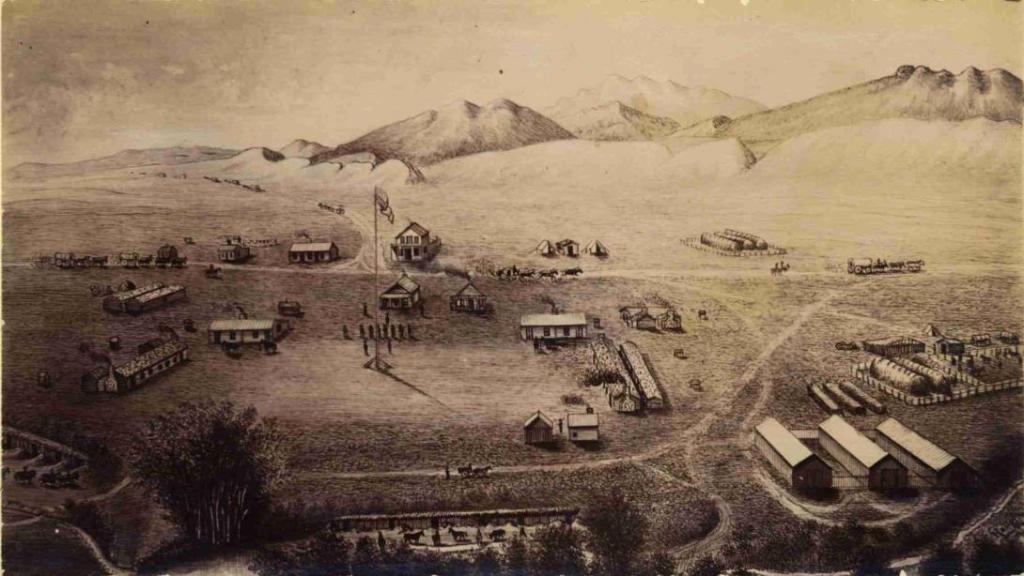
Having started out as an Army outpost in 1865, Fort Collins was built for protection. Ironically—even though the Army was here to protect travelers along the Overland Trail—the original fort never had walls.
Today, the question isn’t about physical threats. It’s about economic ones, which no fortress wall can keep out. With weakening consumer confidence, unpredictable national trade policy, and the lingering trauma of significant inflation, conjecture about a coming recession is never far from the national conversation.
This leads us to ask: How protected is Fort Collins and Northern Colorado from a broader economic downturn? And more importantly, how should local business owners be thinking about the risk?
The Consumer Confidence Index has dropped below COVID recession levels, and consumers are generally cautious about their financial situation in the upcoming year. The CCI and other indicators point to a potential slowdown, though signals are mixed.
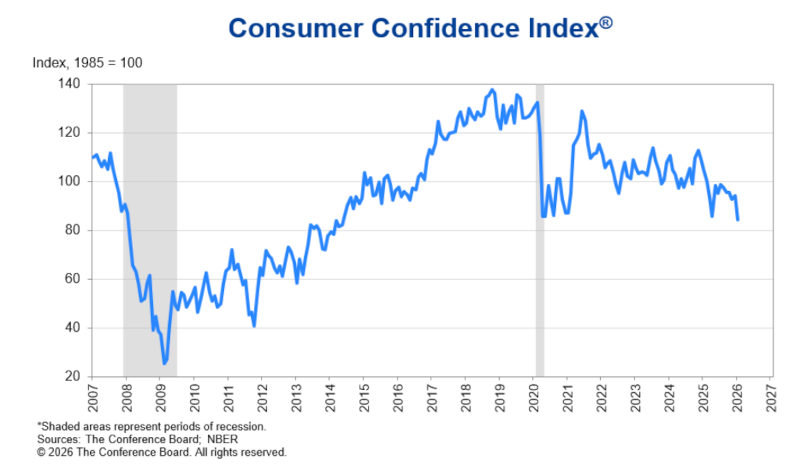
Despite these factors the U.S. economy has shown remarkable resiliency to this point, but the future is far from settled. With the potential of a recession in the near future, how does northern Colorado compare to other regions during national dips in GDP?
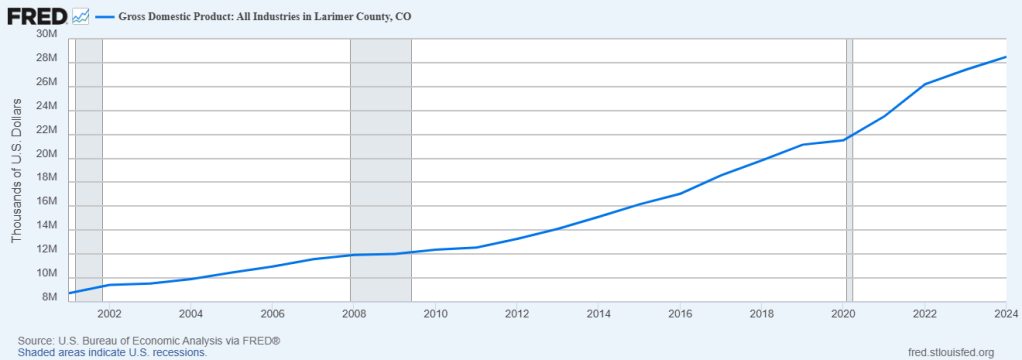
Fort Collins and the surrounding communities enjoy several key structural elements that tend to soften economic shocks compared to other U.S. metropolitan regions. Looking at some key factors like population trends, employment, and industry mix, we can see why.
Population Trends: Slow but Steady Growth
Despite the mushrooming multi-family housing units and surge in leasing costs, population growth in the Fort Collins MSA isn’t as explosive as it once was. The net migration to the area does continue to grow, but about half the rate of the recent peak in 2015.
Nonetheless, the region is still expanding and is expected to continue in the foreseeable future. This expansion provides a solid demand for goods and services, which continues to grow.
Employment: Region Stronger Than Average
One of the clearest recession-resilience signals is the labor market. As of November 2025, the unemployment rate in the Fort Collins Metropolitan Statistical Area (MSA) dipped to 3.4%, just over a full point lower than the U.S. unemployment rate. Historically, the region’s rate is lower than the nation’s, even during the height of the pandemic, when it was four points lower at 10.5% compared with 14.8%.
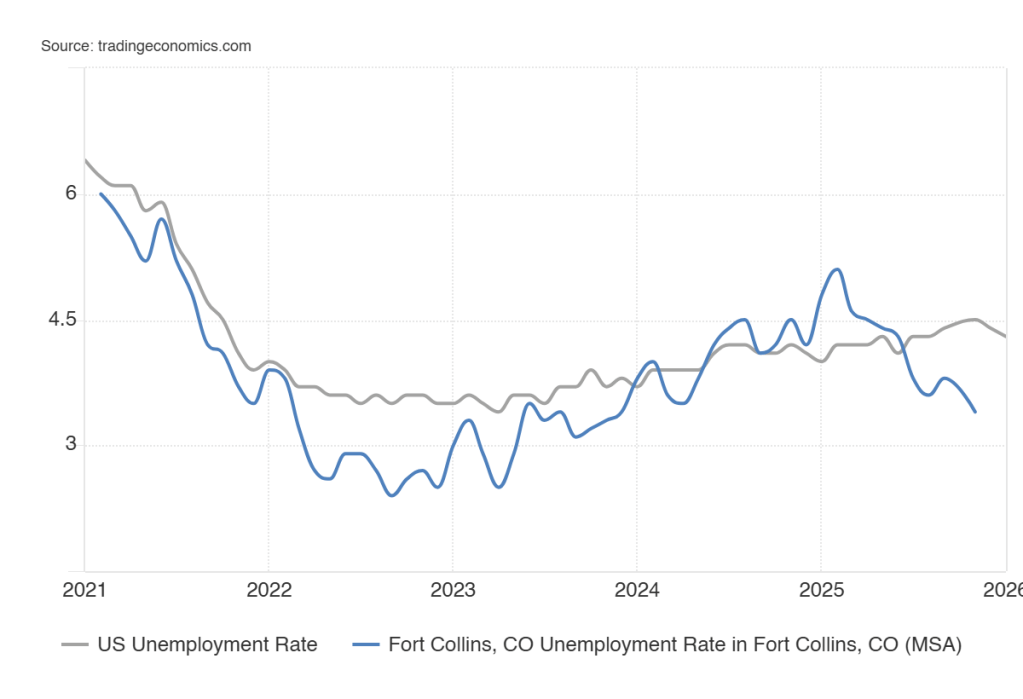
This lower unemployment trend suggests local employers are still adding jobs or maintaining workforce levels, even as national economic indicators soften. It also reflects the diversified nature of employment in the area, which further protects from economic shocks.
Industry Diversity: Anchors For The Fort Collins Corridor
The Northern Colorado region benefits from a mix of stable, less recession-sensitive industries:
- Colorado State University is not only central geographically, but also economically to Fort Collins. It’s the largest employer in the region with around 8,000 employees.
- UCHealth operates Poudre Valley Hospital and numerous health care facilities in the area. Over 5,000 employees call the region home.
- Woodward, Inc. employs over 1,000 and is a major supplier for aerospace and other industries.
In addition to education and healthcare, professional services, technology and government sectors contribute to economic diversity. This combination helps avoid the boom-and-bust dependency seen in other regions tied directly to energy, tourism, or other narrow industrial bases.
Risk Factors: The Flip Side of the Coin
The Northern Colorado region benefits from a mix of stable, less recession-sensitive industries:
- Colorado State University is not only central geographically, but also economically to Fort Collins. It’s the largest employer in the region with around 8,000 employees.
- UCHealth operates Poudre Valley Hospital and numerous health care facilities in the area. Over 5,000 employees call the region home.
- Woodward, Inc. employs over 1,000 and is a major supplier for aerospace and other industries.
In addition to education and healthcare, professional services, technology and government sectors contribute to economic diversity. This combination helps avoid the boom-and-bust dependency seen in other regions tied directly to energy, tourism, or other narrow industrial bases.
Risk Factors: The Flip Side of the Coin
Of course, no economy is recession-proof, and the Fort Collins MSA does face some headwinds:
- Housing affordability is a perennial challenge and some argue a natural consequence of a higher standard of living. Elevated prices can strain household budgets and slow local consumer spending.
- Labor supply growth is tightening due to demographic shifts, and likely tied to the housing affordability issue.
- Colorado’s wider economic forecast calls for modest growth, around 2.9%. This is positive, but slower than historical trends would indicate.
These factors paint a nuanced picture: Fort Collins may have more buffers than some regions, which may blunt the effects of a downturn or recession, but we’re not immune altogether. Fort Collins and the surrounding communities may experience growth moderation while others in the nation experience a more severe downturn.
Bottom Line: How Protected Are We?
Reasonably well, compared to many U.S. cities and regions.
Fort Collins’ economy is reinforced by:
- Consistent population growth, supporting consumer demand
- Diversified employment base (education, healthcare, tech, government)
- Stable employment and typically lower than average unemployment
Of course this doesn’t mean it’s unaffected by broader macroeconomic forces. The pace of growth will still be influenced by the same factors that affect the rest of the nation.
What Does This Mean for Local Business Owners?
While the region can withstand downturns better than others, it may be prudent to tailor growth-oriented and other strategies to be more conservative when signals indicate a softening economy. Some actionable insights for 2026:
- Focus on workforce strategies: Low unemployment in the region means competition for good workers can be fierce. Invest in retention through additional training, flexible staffing models, or now may be the time to offer healthcare benefits.
- Prioritize customer retention over acquisition: Keeping the customers you have produces the largest return. Studies suggest that a 5% increase in customer retention can yield increased profits between 25% and 85%. Of course, new customers are a necessity but keeping the ones you have should be top of mind.
- Lean into community: During periods of uncertainty, trust matters more than ever. Make time for customer conversations and be good with your follow-through. Strengthen referral partnerships. Stay visible and engaged in the community.
There are some local factors that tend to soften the impact of larger economic downturns. Despite this it remains good practice to stay aware of current financial conditions and consider strategic priorities when leaner times come around.
 Fort Collins Business Digest
Leave a comment